

Introduction to car synchronizers
There is a very important device inside the structure of a manual transmission, which is the "synchronizer". The function of a synchronizer is very obvious, that is, when shifting gears, due to the fact that the gear speed at the power output end is faster than the gear that is about to be shifted into this gear, it solves the mechanical device of the inconsistency between the engine speed and the transmission speed during the shifting operation of the car. It can effectively avoid gear shifting and eliminate gear noise during shifting. If there is no synchronizer, forcibly inserting a slow rotating gear into a high-speed rotating gear will definitely cause tooth breakage.
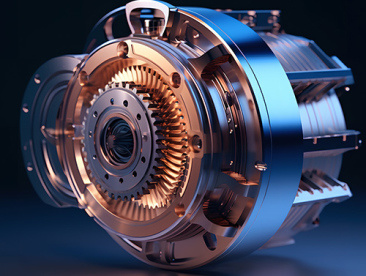
A synchronizer is actually a friction plate arranged on the coupling sleeve and gear set. Unlike ordinary friction plates, its friction surface is conical. The function of this set of friction plates is to perform friction in advance before the straight teeth and the vertical teeth of the disc come into contact, in order to transfer the energy of the higher speed side to the lower speed side, so that the lower speed side can increase the speed and achieve synchronization with the higher speed side. This not only ensures normal gear shifting, but also plays a buffering role, and the number and material of the conical friction plate group directly affect the performance of the synchronizer.
contact information
Focusing on providing high-quality services suitable for our customers
address:Building A, Tianrui Plaza, No. 397 Jianpeng Road, Jiahe Street, Baiyun District, Guangzhou City, Guangdong Province
More contact information